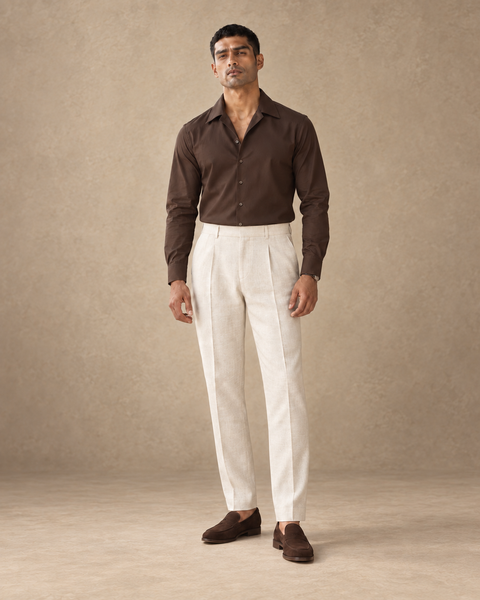
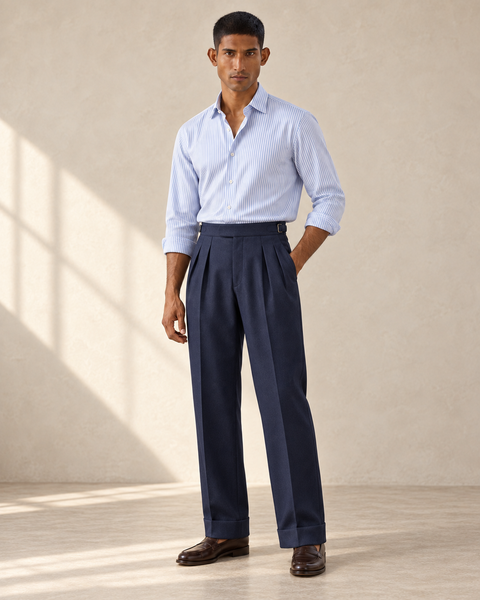
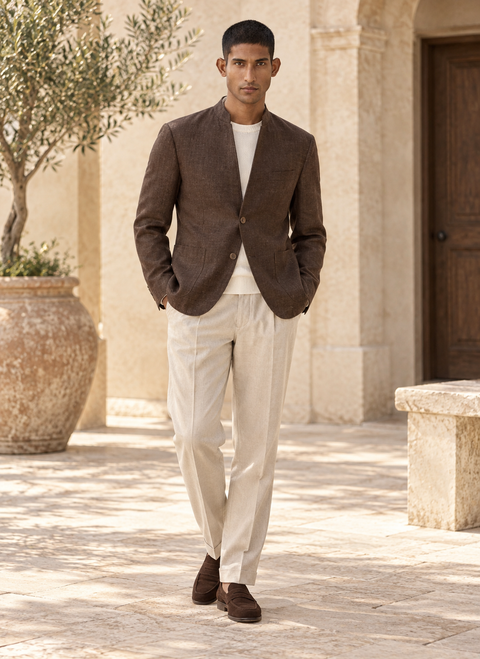


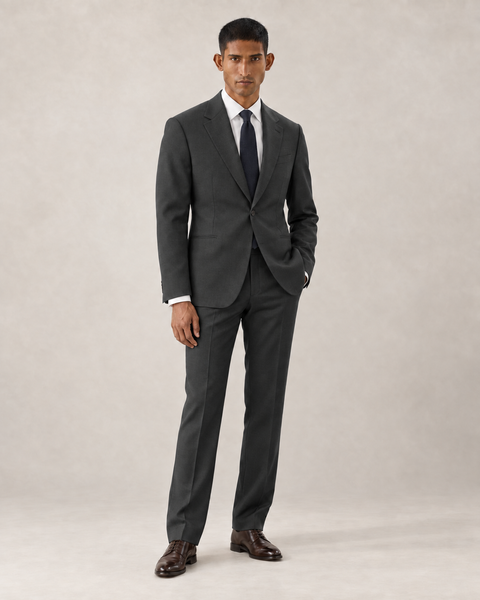











Start with the groom's colours
The father and brothers dress one step below the groom at every function. That is the whole rule. Before anyone chooses a cloth, ask the groom what he is wearing to each function and in what colour. Then choose something that sits beside it in the photographs without repeating it.
The same rule holds for the bride's father and brothers: one step below the couple, never in competition with them.
Function by function
| Function | The father | The brothers |
|---|---|---|
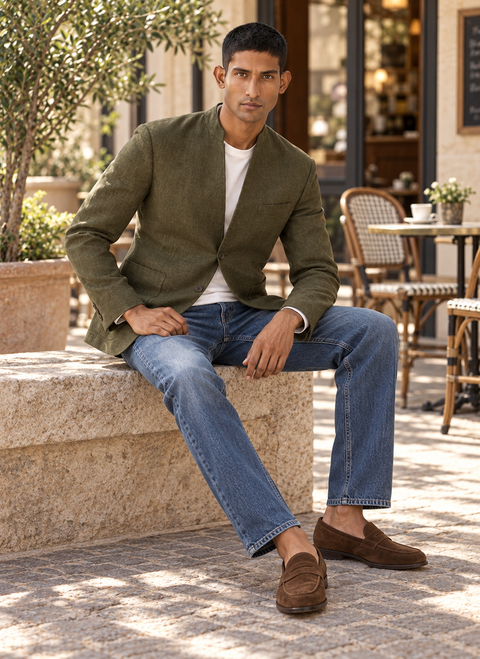
| Haldi, mehendi, pooja | A plain kurta, with a Nehru jacket if the morning is cool | A kurta, or a linen Nehru jacket such as The Lumen over it |
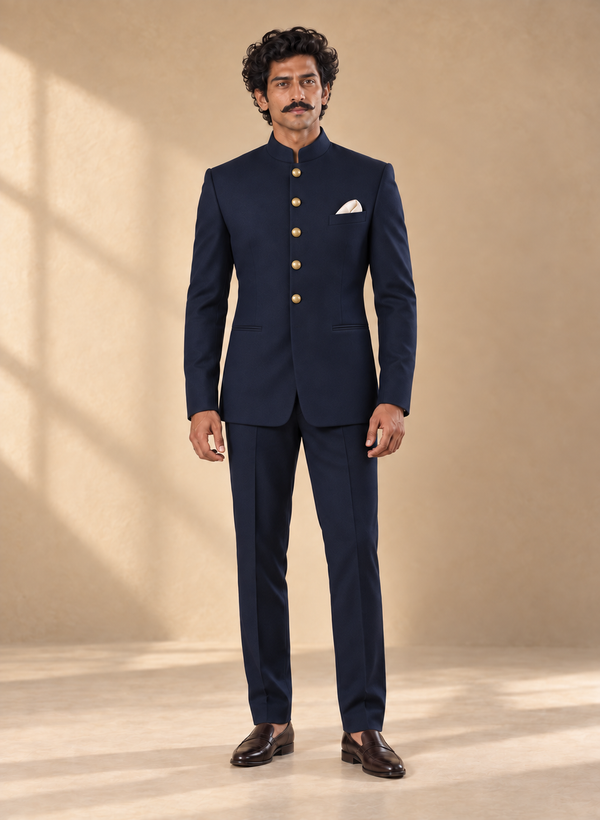
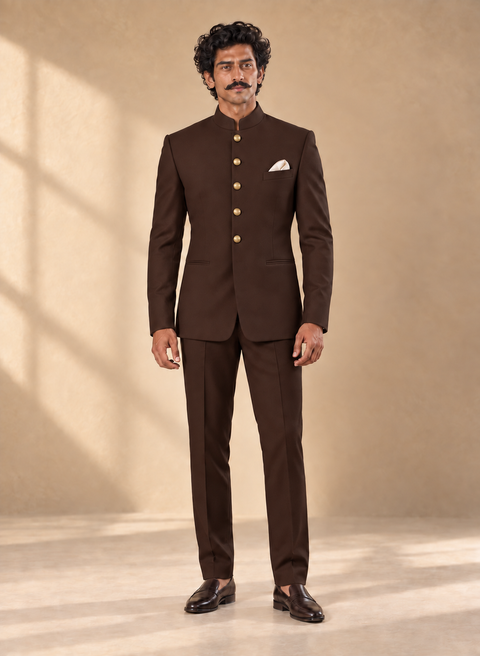
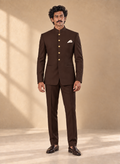
| Sangeet | A Jodhpuri suit such as The Jodhpur Neo | A Jodhpuri suit, or Indo-western if the card has a theme |
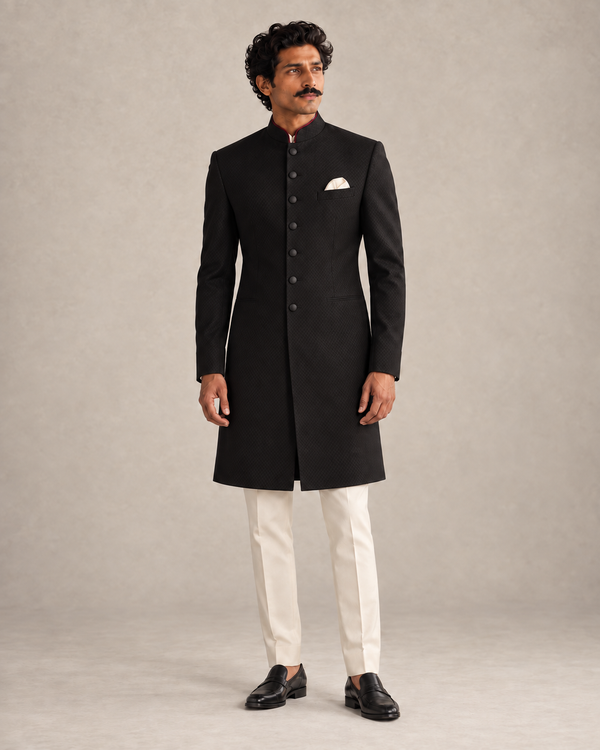
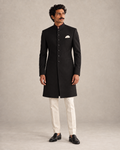
| Wedding night: baraat, jaimala, pheras | An achkan such as The Marwar, or a closed bandhgala such as The Jaipur | An achkan or bandhgala in a quieter colour than the groom's |
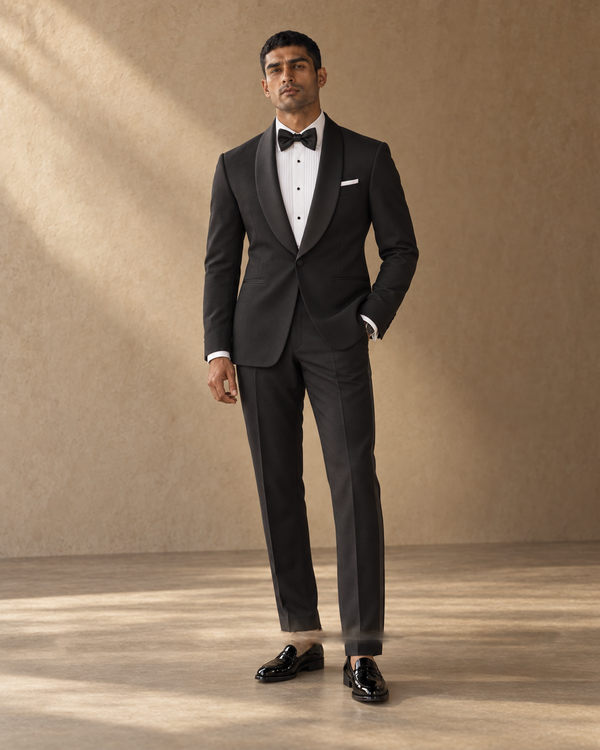
| Reception, card says black tie | A tuxedo: The Vesper or The Nocturne | A tuxedo. A bandhgala is not black tie |
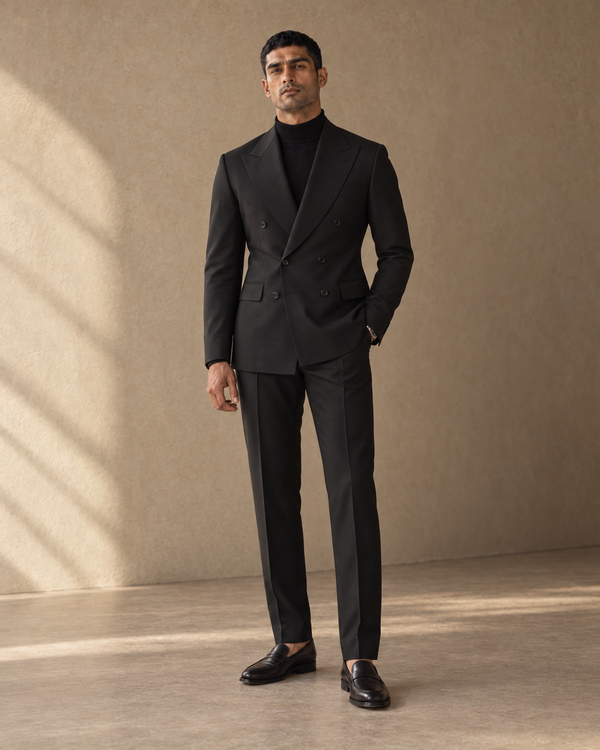
| Reception, no dress line | A dark suit such as The Regent, or an evening bandhgala such as The Noir | A dark suit, a dinner jacket or an evening bandhgala |
What the father wears
The father of the groom is the host for half the wedding. He stands at the entrance, greets every guest and appears in more photographs than anyone except the couple. He needs clothes that look composed for six hours, not ten minutes.
- For the ceremony, an achkan or a closed bandhgala in a dark or neutral cloth. Off-white or chocolate brown works when the groom is in ivory or gold; midnight blue or black when the groom wears a lighter colour.
- For the reception, follow the card. Black tie means a tuxedo. With no dress line, a dark double-breasted suit or a plain evening bandhgala carries the room.
- Fit before decoration. A plain jacket that closes cleanly over the waist looks more senior than heavy embroidery on a jacket that pulls.
What the brothers wear
Brothers have more room to play, because they are younger and the photographs need some energy. The limits are the same: nothing the groom is wearing, nothing louder than the groom.
- Sangeet: the open-necked Jodhpur Neo, or a Nehru jacket over a kurta.
- Wedding night: an achkan or bandhgala. If the groom wears ivory, choose midnight blue, black or chocolate brown.
- Reception: if the groom wears a suit and the card has no dress line, the brother wears a suit too. A tuxedo would out-dress him. If the card says black tie, everyone wears a tuxedo, and the groom will usually choose the more distinctive one.
Three looks for the family
- The bandhgala: The Jaipur in midnight blue, matching trousers, polished black shoes. Wedding night or a formal reception. ₹37,500.
- The tuxedo: The Vesper in black, white dress shirt, black silk bow tie. Any reception card that says black tie. ₹37,500.
- The suit: The Regent in dark chocolate, white shirt, dark tie. A reception or cocktail evening with no dress line. ₹37,500.
How not to match the groom
- Different colour, same depth. If he wears midnight blue, you can wear black or chocolate brown.
- Less embroidery, not more. Plain cloth photographs well beside worked cloth.
- No safa or stole unless the family has agreed one for everyone.
- Ask before buying anything in ivory, gold or red.
What you can wear again
A plain bandhgala, a dark suit and a tuxedo will all be worn again at other weddings, dinners and New Year parties. A heavily worked achkan in a festive colour usually will not. If the budget allows one serious piece, make it the one you will wear again.
Dressing more than one man in the family?
SALVE plans the looks for the father and brothers together, so the colours work side by side before anything is cut. Each man is measured at home or at the office in Gurgaon, Delhi or Noida. Delivery is 14 days from the measuring visit, or 7 days with rush delivery at no extra charge. Read coordinated wedding outfits for men, or plan the family's wedding wardrobe.
Questions, answered
What should the groom's brother wear to an Indian wedding reception?
Follow the card. If it says black tie, a tuxedo. With no dress line, a dark suit, a dinner jacket or an evening bandhgala, in a colour that sits beside the groom's without repeating it, and never louder than his.
Can the groom's brother wear a tuxedo if the groom is wearing a suit?
Only if the card says black tie. Otherwise a tuxedo out-dresses the groom. Match his level of formality: if he wears a suit, the brother wears a suit.
Should the father of the groom wear a sherwani or a bandhgala?
For the wedding night, an achkan or a closed bandhgala, quieter than the groom's sherwani. For the reception, follow the card: a tuxedo for black tie, otherwise a dark suit or an evening bandhgala.
Should the groom's father and brothers match?
Coordinate, do not match. Agree a colour family or a garment, then let each man wear it in his own way. Identical outfits look like a uniform in photographs.
How early should the family order?
At least two weeks before the first function you need the clothes for. SALVE delivers in 14 days from the measuring visit, or 7 days with rush delivery at no extra charge. Book the visits early when several men are being measured.