












What black tie actually means
Black tie is a dress code with a narrow answer: a dinner jacket, formal trousers, a formal shirt and a black bow tie. Everything else is variation within that frame. The reason it survives is that it removes decisions: when everyone is wearing roughly the same thing, the only difference is how well it fits.
The jacket
Three shapes are correct, and they set the tone:
- Peak lapel: the classic. Sharp, formal, and the safest answer when the invitation is strict.
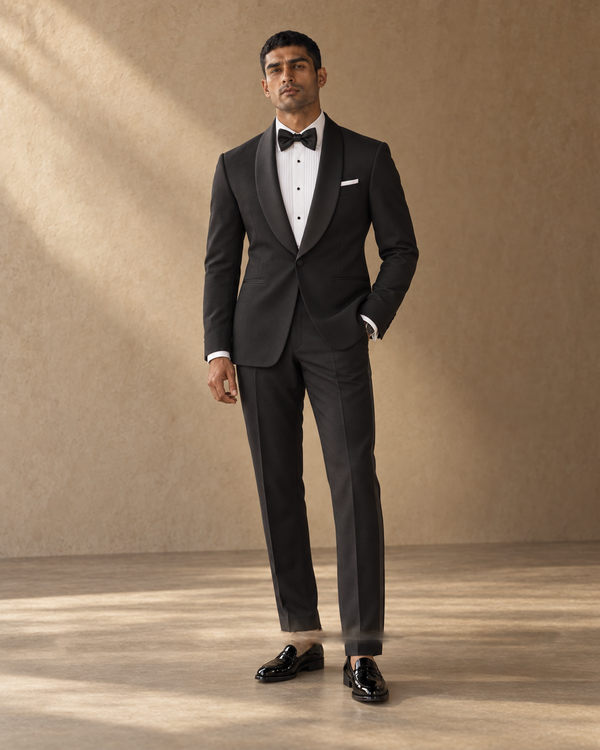
- Shawl collar: a continuous rounded lapel. Softer and more evening-leaning; it reads elegant rather than angular.
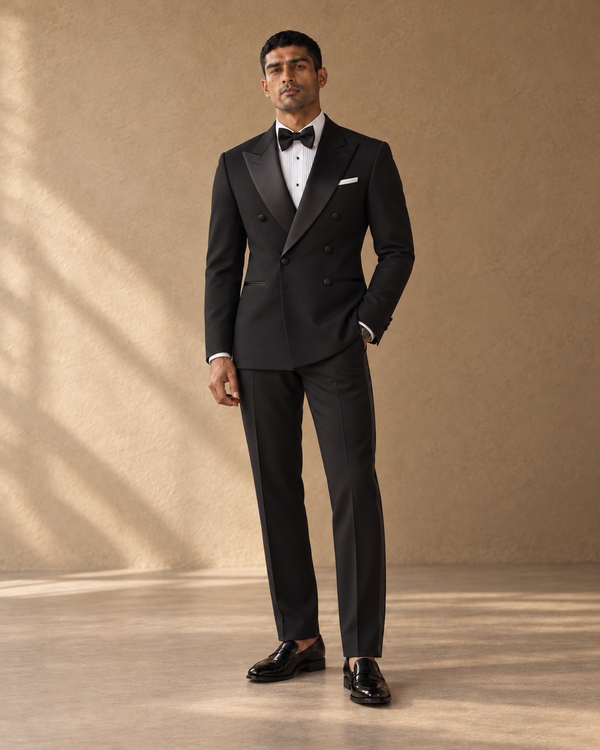
- Double-breasted peak: the most commanding. Stays buttoned all evening, seated or standing, and needs no cummerbund or waistcoat.
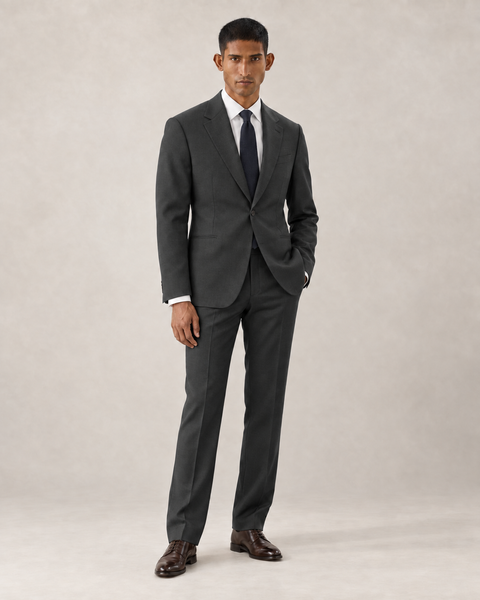
A notch lapel is a business detail and is the one shape that undercuts a dinner jacket. For the full choice, see how to choose a tuxedo.
Why the back is ventless
A ventless back gives the cleanest line, which is the whole point of the garment. Vents break the silhouette at exactly the height a formal jacket wants to be uninterrupted.
The trousers
High rise, flat front, side adjusters, no belt. The rise matters more than anything: it has to sit high enough that no shirt shows between the waistband and the buttoned jacket. Keep the break minimal so the line stays clean when you are standing still, which at a black-tie event is most of the night. More in how a tuxedo should fit.
The shirt and the neckwear
A proper formal shirt for strict black tie. At a modern reception where the dress code is looser, a clean evening shirt worn open at the neck is a legitimate interpretation, but lose the tie before you change the silhouette, not the other way round. The full list is in what to wear with a tuxedo.
Black tie versus black-tie optional
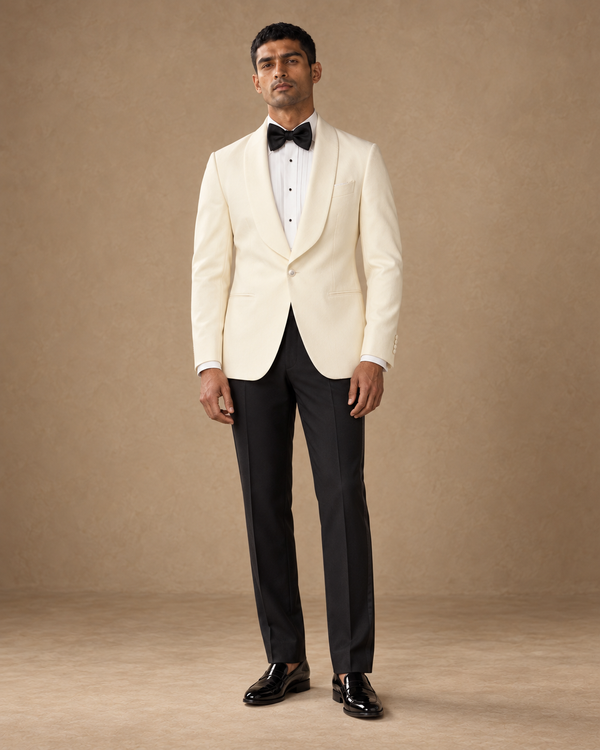
“Black tie optional” means a tuxedo is welcome and a dark occasion suit is acceptable. It is also where a softer dinner jacket earns its place: the formal line with less ceremony, worn with an open collar.
Is a bandhgala black tie?
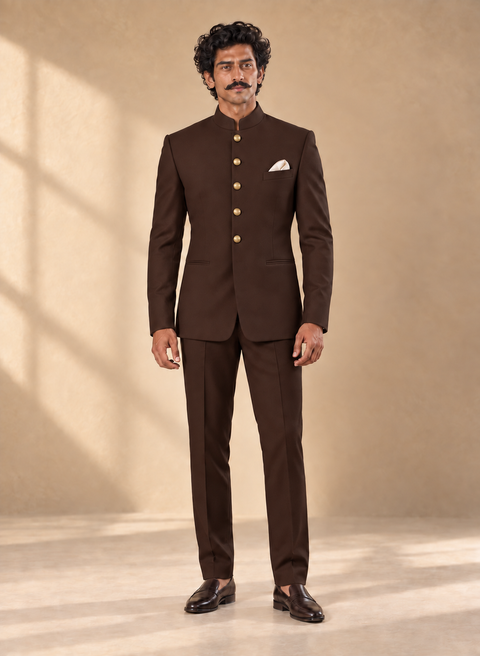
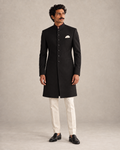
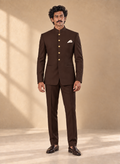
No. A bandhgala is Indian formalwear, a different dress code with its own rules. When the invitation says black tie, wear a tuxedo. Some Indian cards say “black tie or Indian formal”: that is the host offering a second, separate dress code, and if you choose it you are dressing for Indian formal, never with a bow tie. See wearing a tuxedo to an Indian wedding, and for wedding cards, embassy invitations, “national dress” and “lounge suit”, black tie in India.
Getting it right
- Button a single-breasted jacket while standing and open it when you sit; a double-breasted one stays closed.
- Keep accessories traditional and few.
- Polished formal shoes. Nothing with visible branding.
- Fit the shoulder first. Everything else can be adjusted; that cannot.
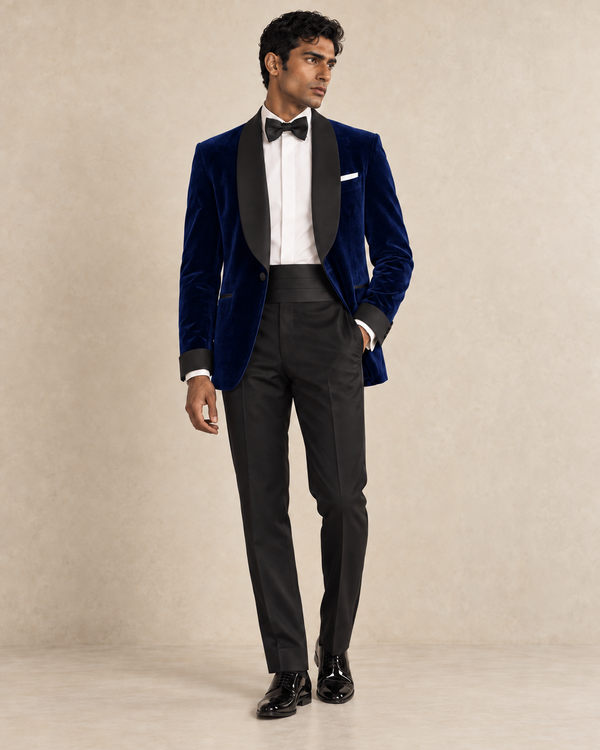
In winter, a velvet dinner jacket is the most festive correct answer: see velvet dinner jackets, and what to wear over a tuxedo on a cold lawn.
SALVE makes tuxedos and evening wear to measure in Gurugram (Gurgaon) through private appointments at home or the office. The Nocturne and The Vesper are ₹37,500 each. Questions about cost and timing are answered in getting a tuxedo made in Gurgaon.
Questions, answered
Can I wear a black suit to a black-tie event?
It is the usual compromise, but it reads as business rather than evening. If the invitation says black tie, a dinner jacket is the correct answer.
Peak lapel or shawl collar?
Both are correct for black tie. Peak is sharper and more upright; shawl is softer and more classical.
Do I have to wear a bow tie?
For black tie, a black bow tie. At a looser reception, an open collar on a clean evening shirt works.
Why no belt with formal trousers?
A belt interrupts the waist and adds bulk under a buttoned jacket. Side adjusters do the same job invisibly.
Is a double-breasted tuxedo correct for black tie?
Yes. A double-breasted dinner jacket is a classic black-tie option and carries more presence than a single-breasted one.