













What the card means: Indian wedding dress codes, decoded
Indo-Western, festive, cocktail, black tie optional. Every phrase on an Indian wedding invitation, what it means for a man, and what to wear as a guest.
Reception on 2 to 6 December? Order by 18 November. Wedding on 11 or 12 December? By 27 November.
Book a fitting Overdressed is forgiven. Underdressed is remembered.

The card arrives, then the PDF, then a separate message for each function with two words at the bottom: Indo-Western, Festive, Black tie. Nobody explains them, and everyone assumes you know. Here is what each one means for a man, and what to wear when you are a guest rather than the groom.
First, three rules that sit under every card
-
Very good.
Dress one notch below the groom.
Never the same colour as him, never more embroidered, never the only sherwani in a room of guests. If you are close family, ask what the family is wearing.
-
Don't.
White, black or bridal red at the ceremony.
In many north Indian families white is the colour of mourning and black is avoided at religious rituals. Head-to-toe red belongs to the bride. Ivory with colour in it, navy, bottle green, maroon and rust are always safe.
-
Depends.
Region and religion.
White is not a problem everywhere: at many weddings in Kerala, white and gold is the point. Black is often fine at a modern reception. When the card is unclear, ask the couple or a cousin. It is a normal question.
The words on the card, decoded
| The card says | What it means | What a guest wears |
|---|---|---|
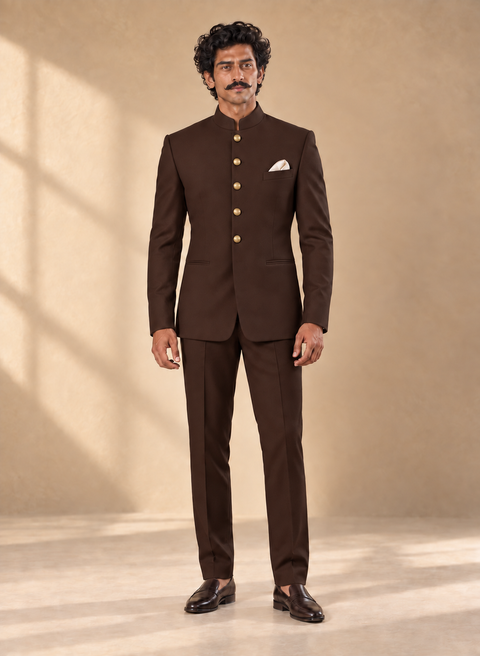
| Traditional or Indian formal | Indian clothes, properly. Usually the wedding night or a ritual. | A bandhgala, an achkan, or a kurta with a Nehru jacket. A sherwani only if you are close family. Not a Western suit. |
| Festive | Dressed up and colourful. Indian or Western both count. | A kurta with a Nehru jacket, a bandhgala in a warmer colour, or a suit in a rich shade. Usually the mehendi, the sangeet or a pooja. |
| Indo-Western | Indian detail on a Western cut, or the other way round. | A bandhgala with tailored trousers, a Nehru jacket over a shirt, or a jacket with a standing collar over a kurta. One Indian element and one Western one. |
| Cocktail | Evening, smart, a bar. Less formal than black tie. | A dark suit, a velvet or coloured dinner jacket, or a bandhgala. A tie is optional with the suit; no tie with the bandhgala. |
| Black tie | The most formal Western code there is. It means one thing. | A tuxedo or dinner jacket, a white dress shirt, a black bow tie and black polished shoes. Not a dark suit. |
| Black tie or Indian formal | Two codes, and you choose one. | A tuxedo for black tie, or a bandhgala, achkan or sherwani for Indian formal. Choose one and commit: no bow tie on a bandhgala. |
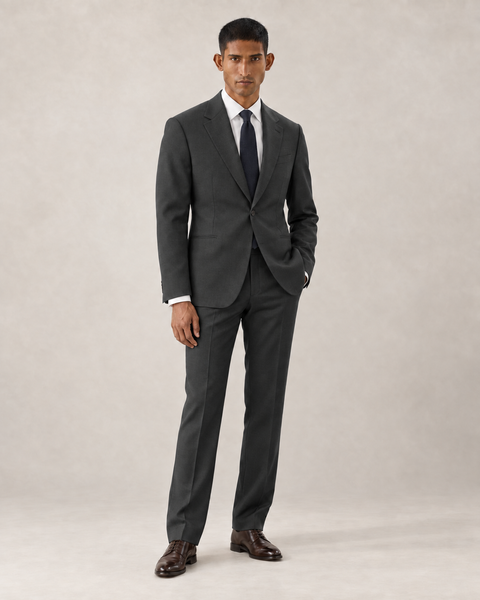
| Black tie optional | The hosts will be in black tie; you may be too. | A tuxedo if you own one. Otherwise a dark navy or charcoal suit with a white shirt and a dark tie. |
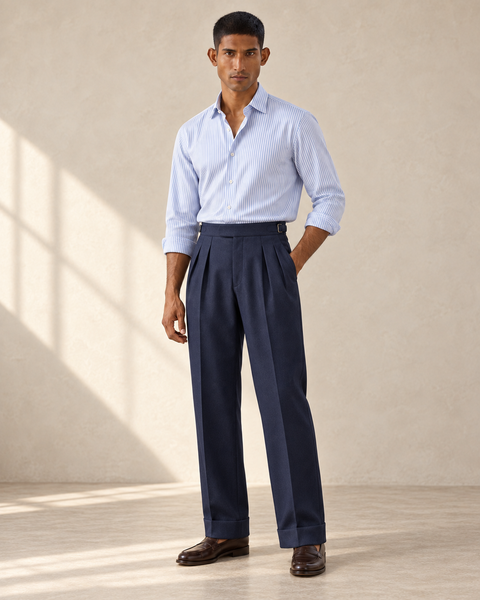
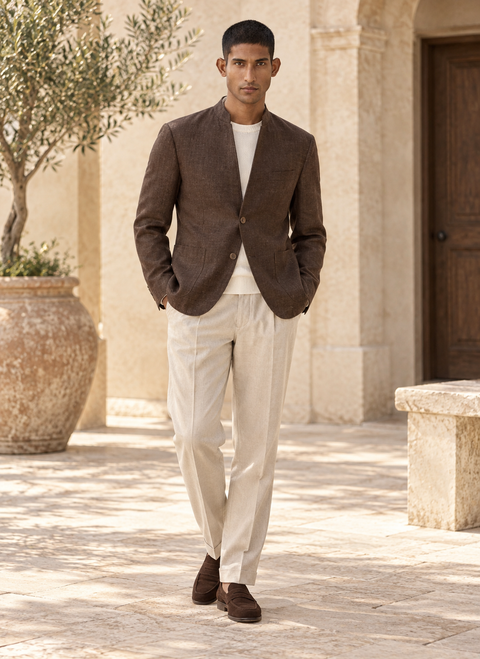
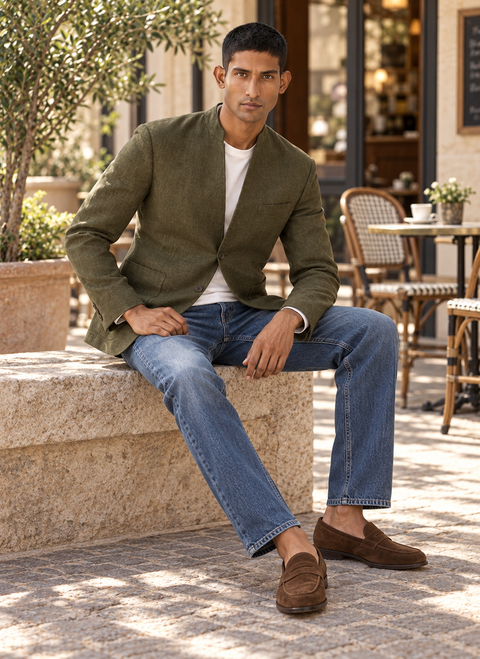
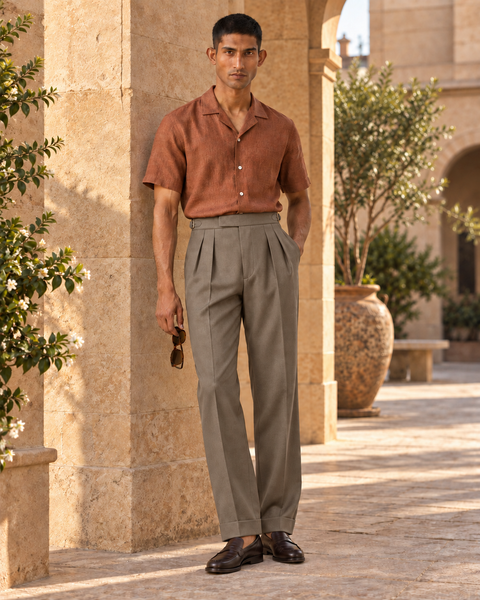
| Smart casual, brunch or pool party | Daytime, relaxed, still a wedding. | A linen jacket over a shirt or a T-shirt, tailored trousers, loafers. No tie, no wool, no shorts unless the card says so. |
| A colour (yellow, pastels, white) | The hosts want the photographs to match. | Follow it. Yellow for the haldi, pastels for a day mehendi. If the card asks for white, the family has decided white is fine: wear it. |
If in doubt between two levels, go one up. Overdressed is forgiven. Underdressed is remembered.
At a gurdwara
For an Anand Karaj, cover your head inside: a plain handkerchief or a patka is fine, and it is worth bringing your own. Shoes come off at the entrance and you will sit on the floor, so wear trousers you can sit cross-legged in. Alcohol and tobacco stay outside, including on the way there. Navy, maroon and earth tones are safe; skip white and all-black.
What covers most of a wedding season
Indian formal, sorted.A bandhgala in midnight navy covers the wedding night, the reception and most cards that say "Indian formal".
Three clasps, open neck.A touch less formal than a closed collar, so it works at the sangeet too.

Black tie, sorted.One tuxedo, and the cards that say "black tie" stop being a problem.
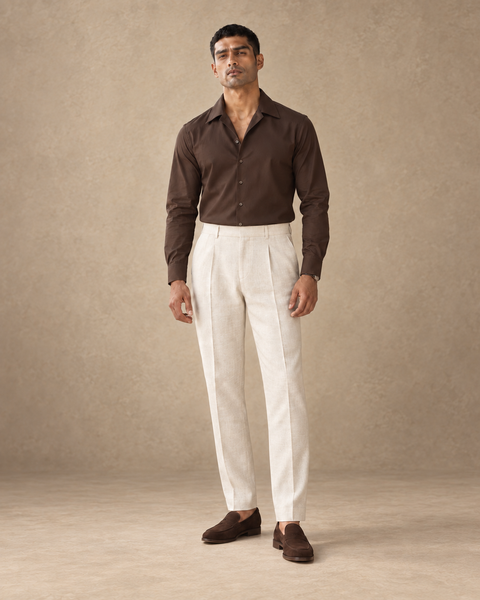
Day functions, sorted.A linen Nehru jacket over a coloured kurta.
| Piece | The cards it answers | Price |
|---|---|---|
| The Jodhpur Neo, fine wool, open neck | Traditional, Indian formal, festive evenings, cocktail | ₹37,500 |
| The Vesper, shawl-collar tuxedo | Black tie, black tie optional, black tie or Indian formal | ₹37,500 |
| The Lumen, linen Nehru jacket | Festive, Indo-Western, the mehendi and day functions | ₹12,500 |
| The Viraj, linen jacket with a standing collar | Smart casual, brunch, Indo-Western | ₹14,500 |
When to order
For a wedding on 11 or 12 December, order by 27 November. That leaves two weeks for the making and one fitting. Rush delivery takes seven days. For a reception between 2 and 6 December, order by 18 November. A cutter comes to your home or office in Gurugram or Delhi. Book a visit.
Function by function, with quick verdicts: GOOD / DON'T: the wedding guest. Black tie in full: the tuxedo, everything you need to know.

Also in the Manual
All stories → Very good.
GOOD / DON'T
The designer tuxedo: how far you can go
Black tie has room for a designer tuxedo. Twelve judgements on jacquard, colour, velvet, rare collars and open shirts, what crosses the line, and how far each dress...
 Very good.
Black tie
What a tuxedo costs, piece by piece
A made-to-measure tuxedo from SALVE is ₹37,500, or ₹39,500 in velvet. With shirt, bow tie and studs, ₹56,000; the complete kit, ₹70,000. Every piece priced, and which ones...
 Very good.
Black tie
Midnight, bottle green or rose: choosing a velvet tuxedo
SALVE's three velvet tuxedos and the Velour, side by side: how formal each is, which night each is for, how to wear velvet and how to look after...