The difference in one table
| Business formal | Business casual | |
|---|---|---|
| Jacket | A matching suit jacket | A blazer or sports jacket, or none |
| Trousers | Matching suit trousers | Tailored trousers or chinos |
| Shirt | White, light blue or fine stripe, double or single cuff | Any collared shirt; knitwear over a shirt |
| Tie | Yes | Optional, usually not |
| Shoes | Black or dark brown oxfords or plain derbies | Loafers, derbies, suede |
| Colours | Navy, charcoal, mid-grey | Wider: olive, brown, stone, blue |
| When | Clients, boards, interviews, formal events | Daily office life, internal meetings |
Business formal, done well
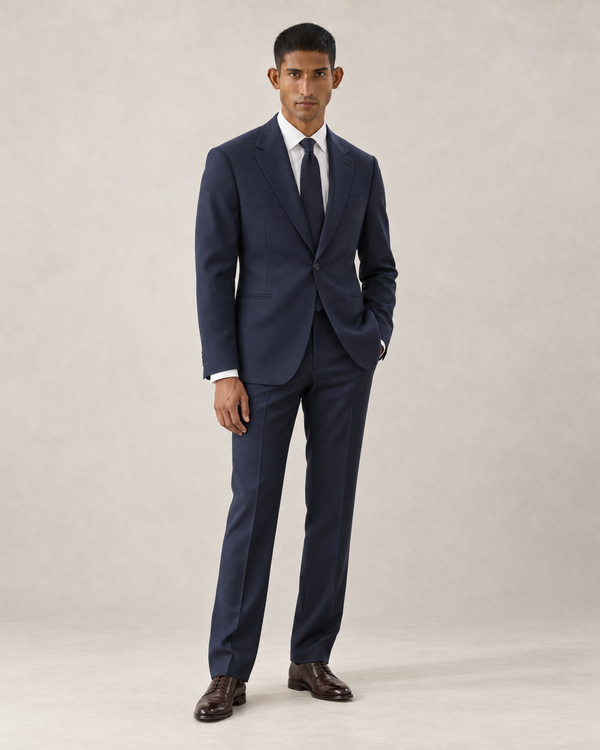
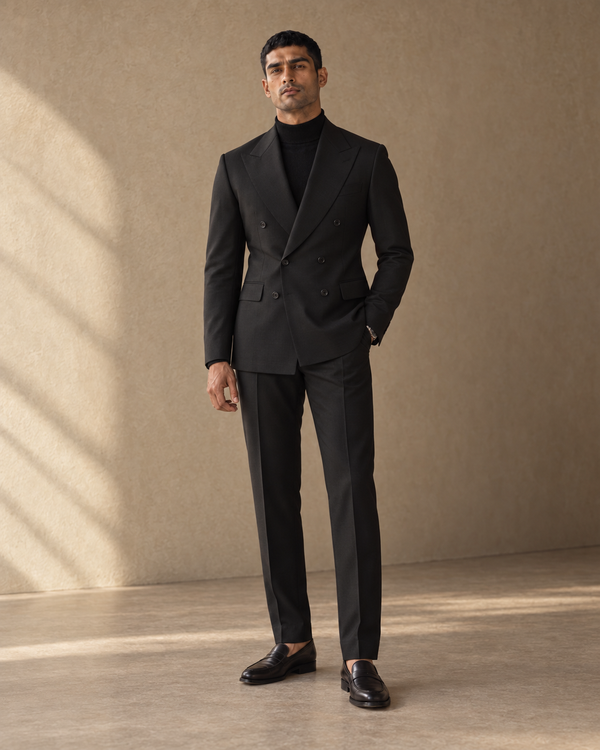
- A single-breasted suit in navy or charcoal. The Lutyens is a good daily suit; the Regent is a double-breasted one for boardrooms.
- A white or light blue shirt with a collar that sits under the jacket without gaps.
- A plain or finely patterned silk tie, knotted to reach the belt.
- Black oxfords with charcoal, black or dark brown with navy, and a matching belt.
Business casual, done well
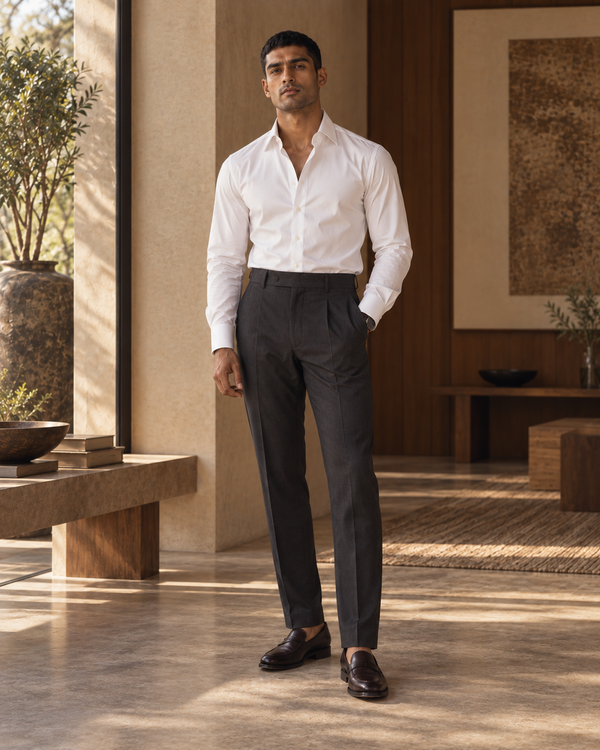
- Tailored trousers in grey, navy or stone, with a crease.
- A tailored shirt in white, blue, pink or a quiet check.
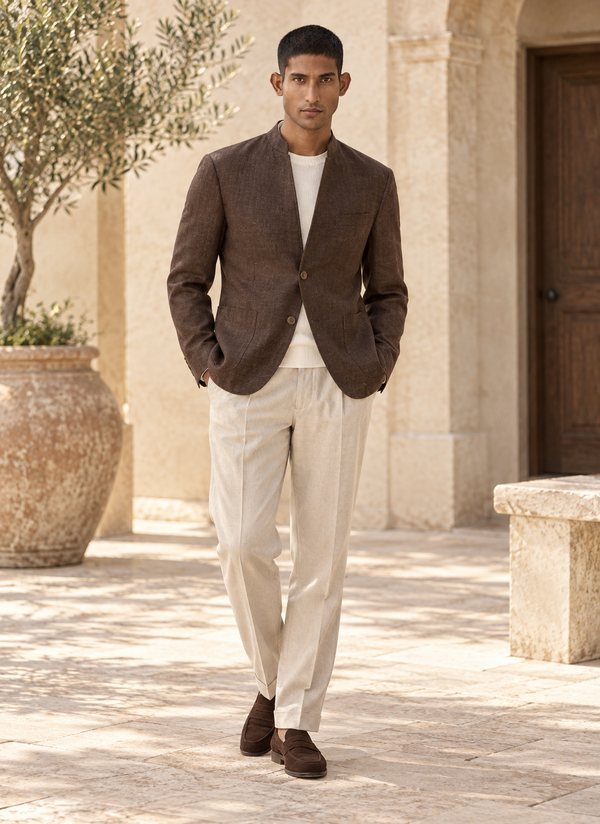
- An unstructured jacket in wool, cotton or linen, like the Viraj, for meetings.
- Loafers or derbies. Clean leather sneakers only if the office clearly allows them.
For more latitude, see our smart casual guide.
The Indian option
A bandhgala with matching trousers is formal wear everywhere in India and is often worn for government meetings, official dinners and diplomatic events. A Nehru jacket over a shirt and trousers is a common business casual choice, and a smart one for festive days in the office.
Dressing for Delhi summers
From April to September, business formal is hard work. Choose lightweight wool (230 to 260 grams per metre) with a half lining, cotton shirts rather than synthetic ones, and keep the jacket on the hanger until the meeting. For business casual, cotton-linen trousers and an unlined jacket are cooler and still correct.
Special cases
- Conferences: business casual, with a jacket. If you are speaking, wear what the most formal person on stage will wear.
- Client visits: match the client's level, then go one step up.
- Office parties: smart casual in the evening; see cocktail attire if the invitation says so.
- Interviews: see what to wear to a job interview.
Building a working wardrobe
Two suits, one jacket, three pairs of trousers and five shirts will cover most working weeks. Made to measure, they will fit better than anything off the rail, and your pattern is kept for the next order. See business suits made to measure.
Questions, answered
A blazer with contrasting trousers is business casual. Business formal needs a matching suit.
Yes, in navy, stone, grey or olive, pressed and well fitted, with a collared shirt and leather shoes.
In business casual offices, a knitted or well-structured polo is usually fine, especially on Fridays. For client meetings, wear a shirt.
A dark Nehru jacket over a shirt and matching trousers is accepted as formal in many Indian government and corporate settings. A bandhgala suit is formal everywhere in India.
Two to start: navy and charcoal. Add a third in mid-grey or a lighter cloth for summer once you wear suits every week.